Jasmine, these information below will answer your question, dear...
"As sperm swim through the vaginal canal and into the cervix, they hit a
"fork in the road," so to speak. At this juncture, some sperm travel to
one fallopian tube, while the rest move on to the other. However, only
one fallopian tube has a fertile egg at a given time. The sperm that
do not reach an "impasse" surround the mature egg and compete with the
other sperm in trying to penetrate it. If a woman's sexual and
reproductive health are in good working condition, the first sperm to
cross the finish line (enter the egg) succeeds in fertilizing it.
"Helper" sperm can also be credited for easing fertilization by allowing
this particular sperm access to and contact with the mature egg during
its trip. With conception initiated, the now fertilized egg sets off
some mechanisms, such as thickening of cervical mucus and hardening of
its outer surface (zona pellucida), to block all other sperm from
entering the egg."
(Credit : http://goaskalice.columbia.edu/why-does-it-take-millions-sperm-fertilize-egg)
"The sperm do eventually die and they are just expelled through normal secretions."
(Credit : http://ehealthforum.com/health/what-happens-to-sperm-t149890-a1.html#ixzz2dEWJRrvx)
Wednesday, August 28, 2013

Tuesday, August 27, 2013
Dr. Temple Grandin
Dear P5 students,
You are curious about Temple Grandin, right? Well, watch this, guys...
(credit : http://www.youtube.com/watch?v=9Ty6vj3aPxM)
You are curious about Temple Grandin, right? Well, watch this, guys...
(credit : http://www.youtube.com/watch?v=9Ty6vj3aPxM)
Let's Talk About Puberty
'The Wise Owls' discussed about puberty in Health Education class. You can check out what they said right here, or click on the link below to watch them on Youtube :
Fertilization process in humans
In IPA class, we discussed 'Perkembangbiakan Manusia'. This following video will show you the fertilization process in humans :
(Credit : http://www.youtube.com/watch?v=x398GSvLbMQ)
Respiratory System : Model Of A Lung
Studying in BATARI SCHOOL is always fun. When discussing Human's Respiratory System, the students created The Lungs Model. They had fun in making the models and learning about the respiratory track at the same time.
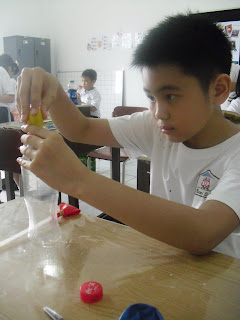


The model itself is quite simple to make. Watch this video and give yourself a try.
(Credit : http://www.youtube.com/watch?v=CBv2BqqAydE)


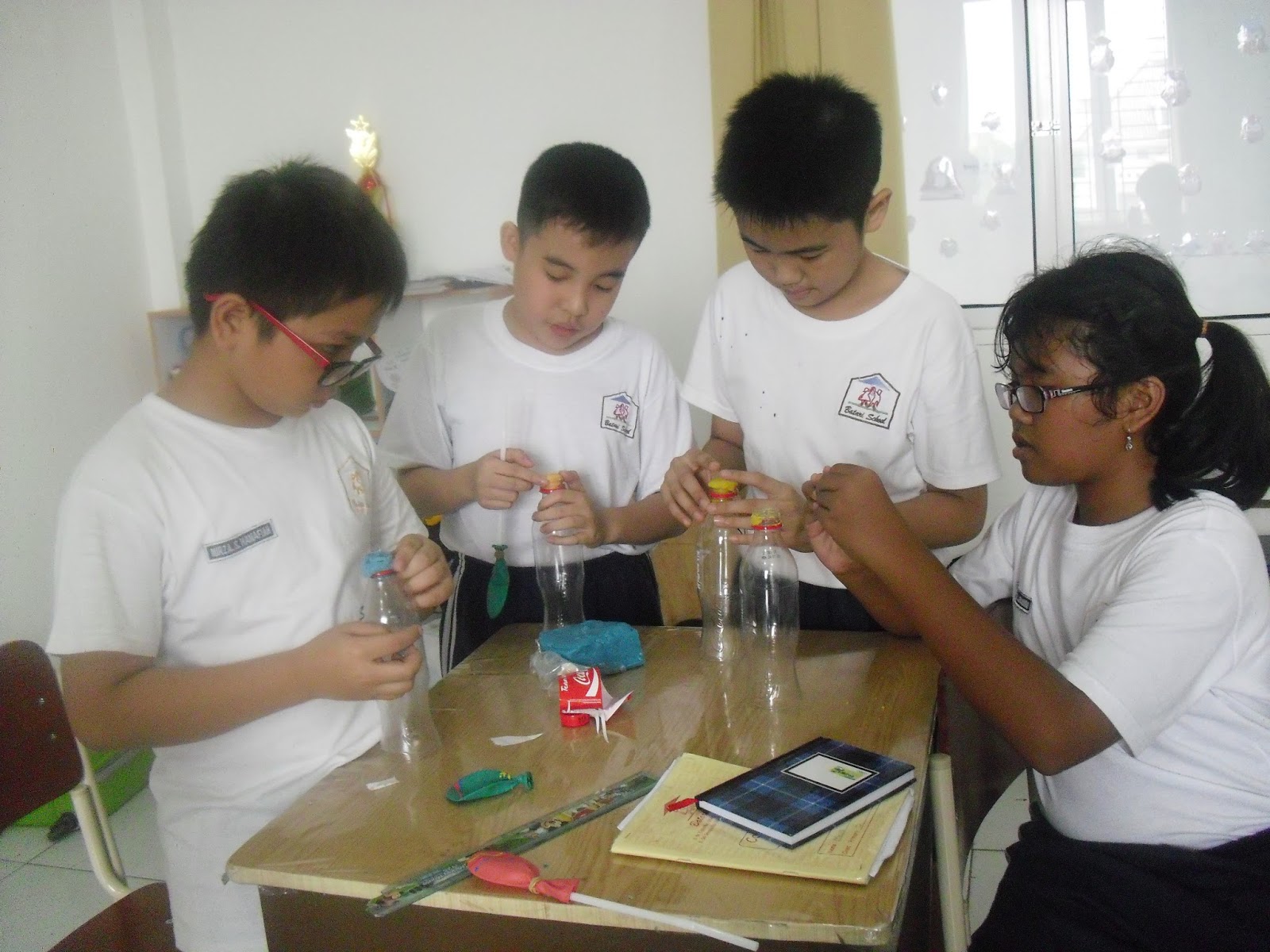

The model itself is quite simple to make. Watch this video and give yourself a try.
(Credit : http://www.youtube.com/watch?v=CBv2BqqAydE)
How Twins Form?
In IPA class, we discussed about 'Perkembangbiakan Manusia". One of the questions the students asked was, "Bagaimana terbentuknya anak kembar?"
Well, Austin has something to share with you. Read this :
Secara umum, kehamilan kembar bisa dibedakan menjadi 2 jenis, berdasarkan jumlah sel telur yang menjadi cikal bakal embrio (bakal janin). Pertama, kembar yang berasal dari 1 sel telur, disebut monozigot. Kedua, kembar yang berasal dari 2 atau lebih sel telur, disebut dizigot. Dari seluruh jumlah orang kembar di dunia, 8% adalah kembar monozigot.
Secara umum, kehamilan kembar bisa dibedakan menjadi 2 jenis, berdasarkan jumlah sel telur yang menjadi cikal bakal embrio (bakal janin). Pertama, kembar yang berasal dari 1 sel telur, disebut monozigot. Kedua, kembar yang berasal dari 2 atau lebih sel telur, disebut dizigot. Dari seluruh jumlah orang kembar di dunia, 8% adalah kembar monozigot.
Credit :
Or you can watch this video below :
(Credit : http://www.youtube.com/watch?v=WQNtXCmf-T8)
Well, Austin has something to share with you. Read this :
Kehamilan kembar
Secara umum, kehamilan kembar bisa dibedakan menjadi 2 jenis, berdasarkan jumlah sel telur yang menjadi cikal bakal embrio (bakal janin). Pertama, kembar yang berasal dari 1 sel telur, disebut monozigot. Kedua, kembar yang berasal dari 2 atau lebih sel telur, disebut dizigot. Dari seluruh jumlah orang kembar di dunia, 8% adalah kembar monozigot.
Secara umum, kehamilan kembar bisa dibedakan menjadi 2 jenis, berdasarkan jumlah sel telur yang menjadi cikal bakal embrio (bakal janin). Pertama, kembar yang berasal dari 1 sel telur, disebut monozigot. Kedua, kembar yang berasal dari 2 atau lebih sel telur, disebut dizigot. Dari seluruh jumlah orang kembar di dunia, 8% adalah kembar monozigot.
Monozigot. Proses terjadi kehamilan kembar: Satu sel telur yang telah dibuahi oleh satu sel sperma (zigot), membelah diri menjadi dua belahan. Setelah menempel di dinding rahim, kedua belahan berkembang sendiri-sendiri menjadi janin yang sempurna.
Kembar jenis ini disebut juga sebagai kembar identik atau kembar satu telur. Kemungkinan terjadi kembar identik adalah 1 dari 150 kelahiran. Kembar identik terjadi karena faktor alam, dan bukan faktor keturunan Sekitar 75% kehamilan kembar identik, hanya mempunyai satu ari-ari atau plasenta dengan satu selaput ketuban (amnion). Atau, satu ari-ari dengan dua selaput ketuban.
Ciri khasnya:
Kembar jenis ini disebut juga sebagai kembar identik atau kembar satu telur. Kemungkinan terjadi kembar identik adalah 1 dari 150 kelahiran. Kembar identik terjadi karena faktor alam, dan bukan faktor keturunan Sekitar 75% kehamilan kembar identik, hanya mempunyai satu ari-ari atau plasenta dengan satu selaput ketuban (amnion). Atau, satu ari-ari dengan dua selaput ketuban.
Ciri khasnya:
- Selalu berjenis kelamin sama, yakni perempuan dan perempuan, atau laki-laki dan laki-laki.
- Mereka biasanya memiliki wajah dan penampilan sama, bahkan seringkali memiliki kepribadian yang sangat mirip satu sama lain.
- Anak kembar identik tercatat berumur lebih panjang dibanding anak kembar fraternal. Kembar identik bisa berumur hingga lebih dari 100 tahun
Dizigot. Proses terjadinya: Satu atau lebih sel telur dibuahi oleh dua sel sperma yang berbeda. Lalu, masing-masing hasil pembuahan (zigot) berkembang menjadi janin yang sempurna. Kembar jenis ini disebut kembar fraternal atau kembar dua telur. Kemungkinan terjadi kembar fraternal adalah 1 dari 60 kelahiran. Kembar fraternal merupakan sifat yang genetik yang diturunkan
Ciri khasnya:
Ciri khasnya:
- Jenis kelamin mereka bisa sama dan bisa juga berbeda, yakni laki-laki dan perempuan.
- Wajah dan penampilan mereka biasanya tidak terlalu mirip, dan seringkali terlihat seperti kakak-adik.
- Anak kembar fraternal, walau pun berumur panjang hingga 80-90 tahun, tapi tidak sepanjang umur anak kembar identik.
Credit :
Or you can watch this video below :
(Credit : http://www.youtube.com/watch?v=WQNtXCmf-T8)
Subscribe to:
Posts (Atom)